Crop Spraying Drones vs Traditional Methods: A Real Cost Comparison for Farmers
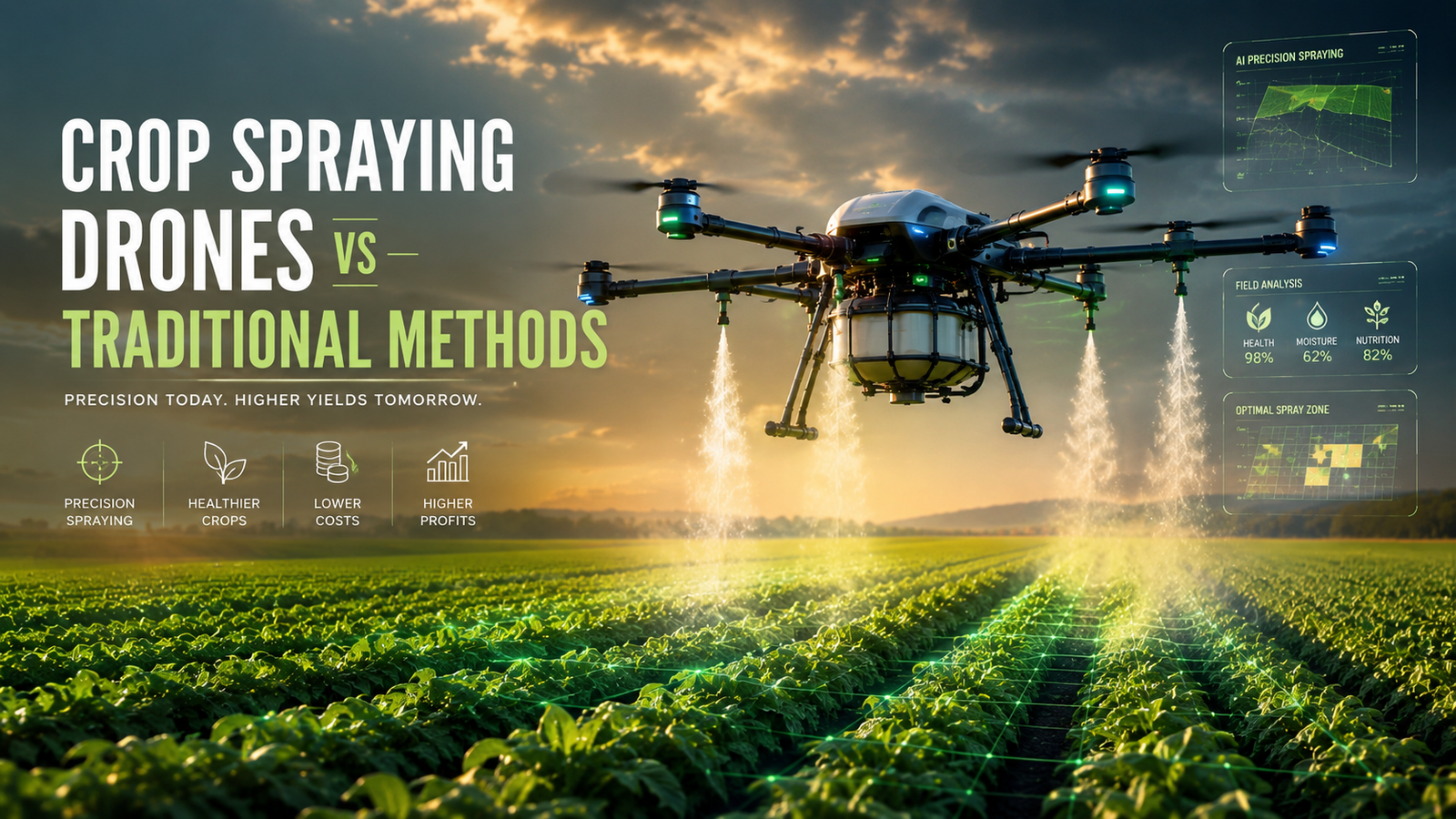
For generations, farmers have relied on tractors and manual labour to spray pesticides and fertilisers. It is a method that gets the job done, but it comes with high costs, wasted materials, and health risks. Now, a new era is here. Crop spraying drones are changing the game. But the big question for any farmer is: does it actually save money? Let’s break down the real costs of traditional methods versus modern drone spraying.
The Hidden Costs of Traditional Spraying
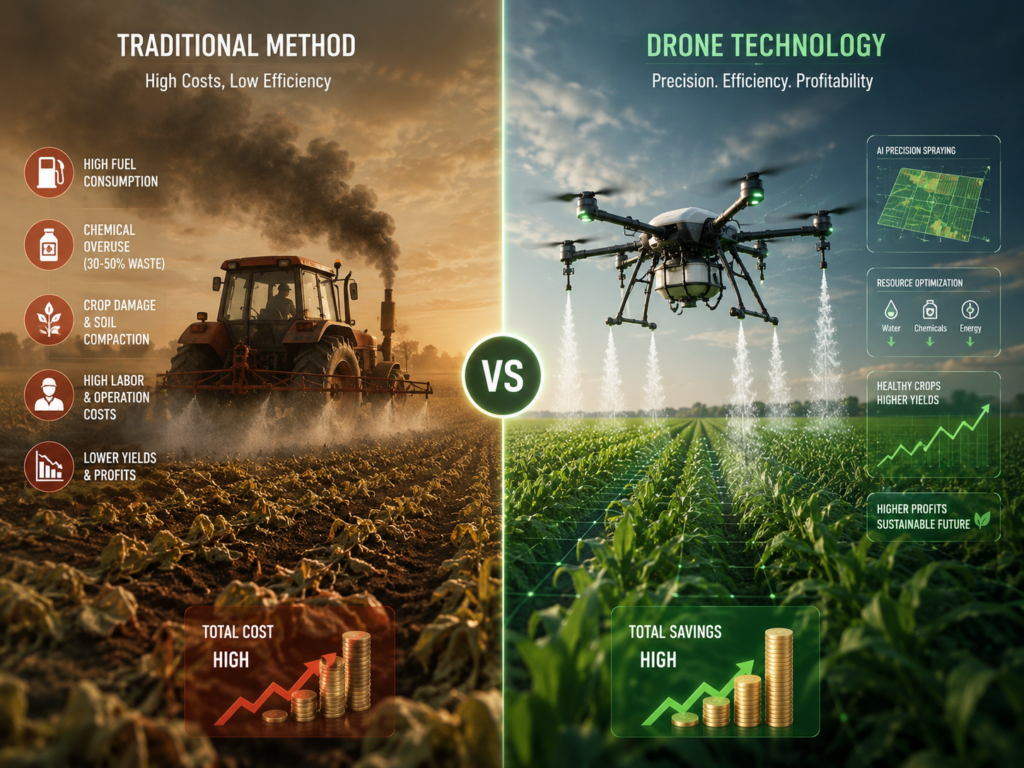
At first glance, hiring a tractor with a sprayer or doing it by hand seems like a known expense. But look closer, and you will find many hidden costs. First, there is the waste. Traditional sprayers cover the entire field, including the empty spaces between plants. This over-application means you buy much more pesticide than you actually need. Studies show that traditional methods can waste up to 30-50% of the chemicals.
Second, there is the cost of crop damage. Heavy tractors drive over the soil, compacting it. This harms root growth and reduces future yields. The tyres also run over the plants themselves, crushing a percentage of your crop. This is pure loss. Third, there are labour costs. Hiring a skilled tractor driver is expensive. You also have to pay for fuel, maintenance, and the depreciation of the expensive machinery itself.
The Drone Advantage: Precision is Profit
Crop spraying drones work differently. They don’t drive on the field. They fly over it. This one change solves many problems at once. Drones use a technology called Variable Rate Application (VRA). They can see the field from above and spray only where it is needed. This targeted spraying can reduce chemical use by an average of 30-50%. For a large farm, the savings on pesticides alone can pay for the drone within a single season.
Consider a 100-hectare farm. With traditional methods, you might spend a huge amount on chemicals. With a drone, you cut that cost in half. There is zero crop damage from heavy tyres. There is no soil compaction. The drone covers the field much faster. A drone can spray up to 2-3 hectares in an hour, which is much faster than a tractor in many conditions. You also save on fuel and labour. One operator can manage the drone, and the energy cost is just a fraction of what a diesel tractor burns.
The Real Verdict: Short-Term Investment vs. Long-Term Savings
The initial cost of a commercial agriculture drone is higher than a simple manual sprayer. This is the biggest hurdle for most farmers. You are looking at an investment for a quality drone, battery system, and training. However, this is a one-time investment.
When you calculate the total cost of ownership over 2-3 years, the drone is much cheaper. You save on chemicals (30-50%), you save on labour, you save on fuel, and you prevent crop loss. Your yield increases because your soil stays healthy and your plants are not crushed. The return on investment (ROI) for a spraying drone is often less than one year for medium to large farms. For smaller farms, service providers are a great option.
Traditional methods are not going away completely, but the economic argument for drones is now impossible to ignore. It is not just about being modern. It is about being more profitable.